Propylene Carbonate-PC
Propylene Carbonate-PC
PROPYLENE CARBONATE (PC)
– PREMIUM GRADE PRODUCT PROFILE
1. Product Overview
Propylene Carbonate (PC) is a high-purity, cyclic organic carbonate recognized globally as a versatile, environmentally responsible solvent. As a colorless, low-odor liquid with a remarkably high boiling point and flash point, it delivers exceptional solvency power for both polar and non-polar compounds. Its unique molecular structure, combined with low volatility and favorable toxicological profile, positions PC as the preferred "green" alternative to conventional hazardous solvents across a wide spectrum of advanced industrial applications.
| Property | Specification |
|---|---|
| Chemical Name | Propylene Carbonate |
| Synonyms | Propylene Carbonate (PC), 4-Methyl-1,3-dioxolan-2-one |
| CAS Number | 108-32-7 |
| Molecular Formula | C₄H₆O₃ |
| Molecular Weight | 102.09 g/mol |
| EINECS Number | 203-572-1 |
2. Physicochemical Properties – Engineered for Performance
The technical superiority of Propylene Carbonate lies in its balanced physical and chemical profile, making it suitable for the most demanding processes.
| Parameter | Value / Description |
|---|---|
| Appearance | Clear, colorless liquid; mild ethereal odor |
| Melting / Boiling Point | –49°C / 240–242°C — offers an exceptionally wide liquid range for operational flexibility |
| Density (20°C) | ~1.20 g/cm³ |
| Solubility | Fully miscible with water (approx. 240 g/L at 20°C) and with most organic solvents (acetone, benzene, chloroform, ethyl acetate, ethers, etc.). Functions as an outstanding co-solvent and coupling agent. |
| Viscosity (20°C) | ~2.5 mPa·s — ensures excellent flow and wetting properties |
| Flash Point (Closed Cup) | 123–152°C — high flash point enhances safety in handling and storage |
| Chemical Stability | Stable under normal conditions; hygroscopic (moisture-sensitive); incompatible with strong oxidizers, strong acids, and strong alkalis |
3. Product Grades & Quality Assurance
We supply Propylene Carbonate in multiple purity grades to precisely match your application requirements. The Battery Grade represents our highest specification, designed for mission-critical energy storage systems.
| Parameter | Battery Grade (Ultra-High Purity) | Industrial Grade (Premium) |
|---|---|---|
| Purity (GC) | ≥ 99.99% – 99.995% | ≥ 99.7% – 99.9% |
| Moisture Content | ≤ 20 – 50 ppm | ≤ 0.01% – 0.05% |
| Propylene Oxide / Propylene Glycol | ≤ 0.01% | ≤ 0.01% |
| Color (APHA/Pt-Co) | ≤ 10 | ≤ 10 |
| Appearance | Clear, free of suspended matter | Clear, free of suspended matter |
Critical Note: Battery-grade PC undergoes rigorous moisture control — humidity levels are strictly maintained below 50 ppm (and as low as 20 ppm upon request) to safeguard the cycle life and thermal stability of lithium-ion cells.
4. Core Application Areas – Where Performance Meets Versatility
Propylene Carbonate is not just a solvent; it is a functional enabler across multiple high-growth sectors.
A. Lithium-Ion Battery Electrolytes – The Primary Growth Driver
As a key component in secondary battery formulations, PC delivers:
High Dielectric Constant: Superior lithium salt (e.g., LiPF₆) dissociation capability, ensuring high ionic conductivity.
Robust SEI Film Formation: Promotes a stable solid-electrolyte interphase on anode surfaces, significantly extending battery life and enhancing safety.
Wide Operating Temperature Range: Maintains consistent discharge performance under both sub-zero and elevated-temperature conditions.
B. High-Efficiency Gas Treatment
Leveraging its strong affinity for polar gases—especially carbon dioxide—PC is widely deployed in natural gas refining, petroleum cracking, and ammonia synthesis units for the selective removal of CO₂ and H₂S, making it a trusted solvent in the energy processing chain.
C. Polymer & Coating Additives
Eco-Friendly Plasticizer: Compatible with polyurethanes and acrylic resins, it improves flexibility, tensile strength, and processability.
High-Boiling Solvent & Leveling Agent: Used in industrial coatings and printing inks, it reduces viscosity without volatile organic compound (VOC) emissions, aligning with modern environmental regulations.
D. Fine Chemical & Synthetic Intermediate
Synthesis Building Block: A key precursor in the production of dimethyl carbonate (DMC) via transesterification; also reacts with amines to form carbamates for pharmaceutical and agrochemical intermediates.
Selective Extractor: Employed in the separation of olefins and aromatics.
Specialty Uses: Serves as a catalyst carrier in foundry binders and as a dispersant/solvent in personal care formulations (lipsticks, mascaras) and industrial cleaners.
5. Packaging, Storage & Logistics – Preserving Quality at Every Step
To maintain the stringent low-moisture and high-purity standards of our Propylene Carbonate, we follow best-in-class handling protocols:
Packaging Options:
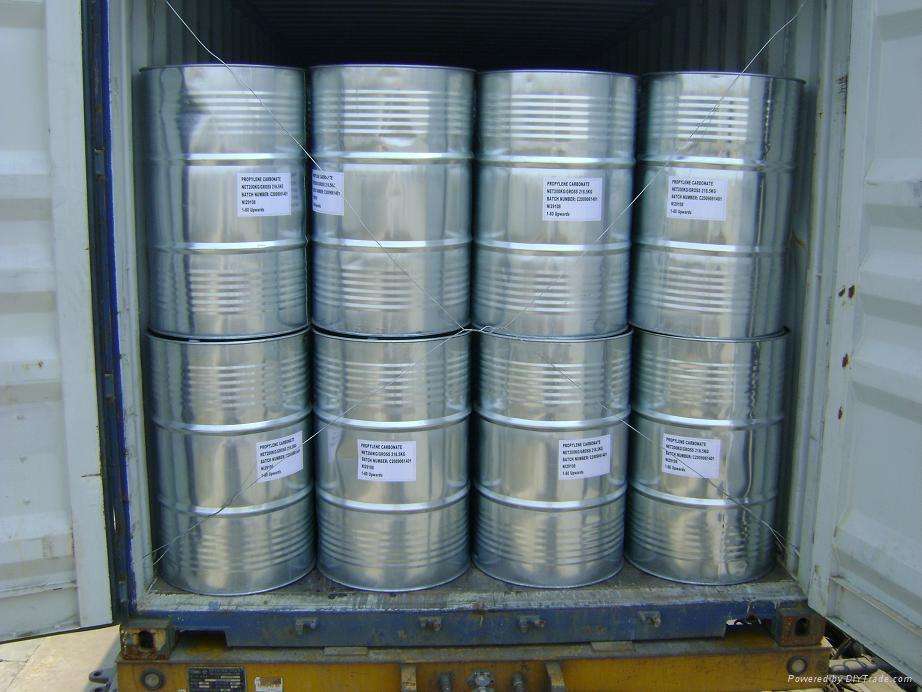
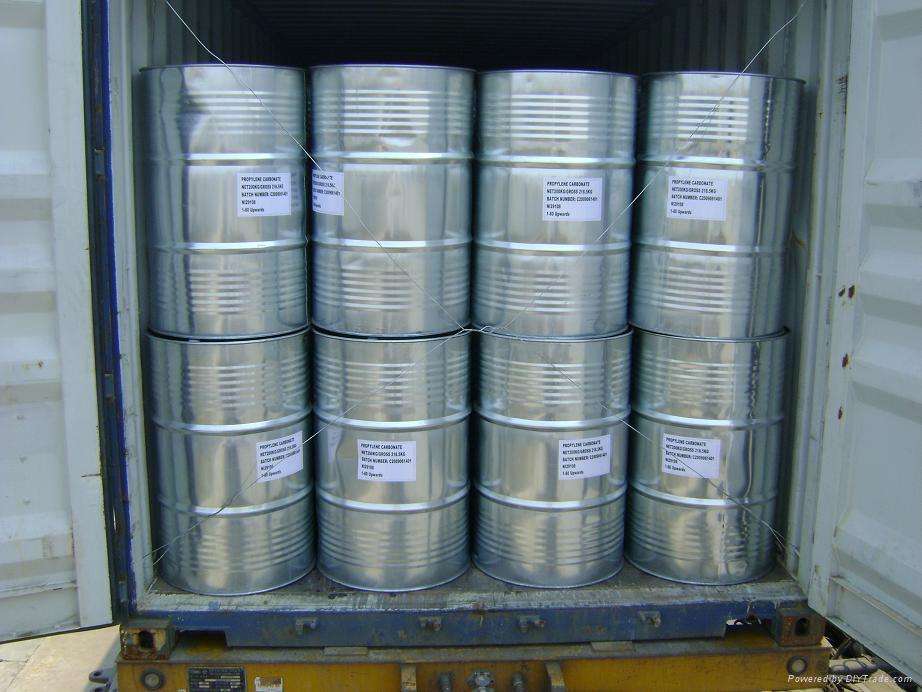
Galvanized/coated steel drums (net 250 kg)
IBC totes (1,000 L)
ISO tank containers & bulk tanker trucks (for large-volume supply)
Lab-scale fluorinated bottles (for R&D/sampling)
Storage Recommendations:
Store in a cool, dry, and well-ventilated area, away from heat, open flames, and direct sunlight. Keep containers tightly sealed to prevent moisture ingress and cross-contamination. Segregate from strong oxidizers.Shelf Life:
Up to 24 months when stored under recommended conditions (temperature preferably below 37.8°C) in original unopened containers.
6. Why Choose Our Propylene Carbonate?
Consistent Quality: Advanced distillation and dehydration technologies ensure batch-to-batch reproducibility.
Supply Reliability: Flexible packaging and logistics networks support just-in-time delivery for both laboratory trials and industrial-scale production.
Technical Support: Our team of application engineers is ready to assist with formulation optimization and process integration.
Sustainability Commitment: High-purity, low-VOC, and non-hazardous profile supports your environmental, social, and governance (ESG) goals.
Conclusion
Propylene Carbonate stands at the intersection of high-performance chemistry and sustainable innovation. Whether you are advancing next-generation energy storage, refining clean fuels, or developing high-spec coatings and polymers, our premium-grade PC delivers the purity, stability, and solvency power your processes demand.
Disclaimer: The information provided herein is based on current technical knowledge and is intended for informational purposes only. Users are strongly advised to consult the relevant Safety Data Sheet (SDS) and conduct their own risk assessments prior to handling or application.
For technical data sheets, samples, or commercial inquiries, please contact our sales team.