Maleic Anhydride
Maleic Anhydride
A Strategic Platform Chemical for High-Value Derivatives
Maleic Anhydride (MAH), systematically named cis‑butenedioic anhydride, commonly referred to in the industry as "Maleic", ranks among the world's three major organic anhydrides – alongside acetic anhydride and phthalic anhydride. It serves as a critical bridge between C4 petrochemical feedstocks and a vast array of fine chemical value chains, making it an indispensable intermediate for modern industrial chemistry.
Ⅰ. Physical & Chemical Properties at a Glance
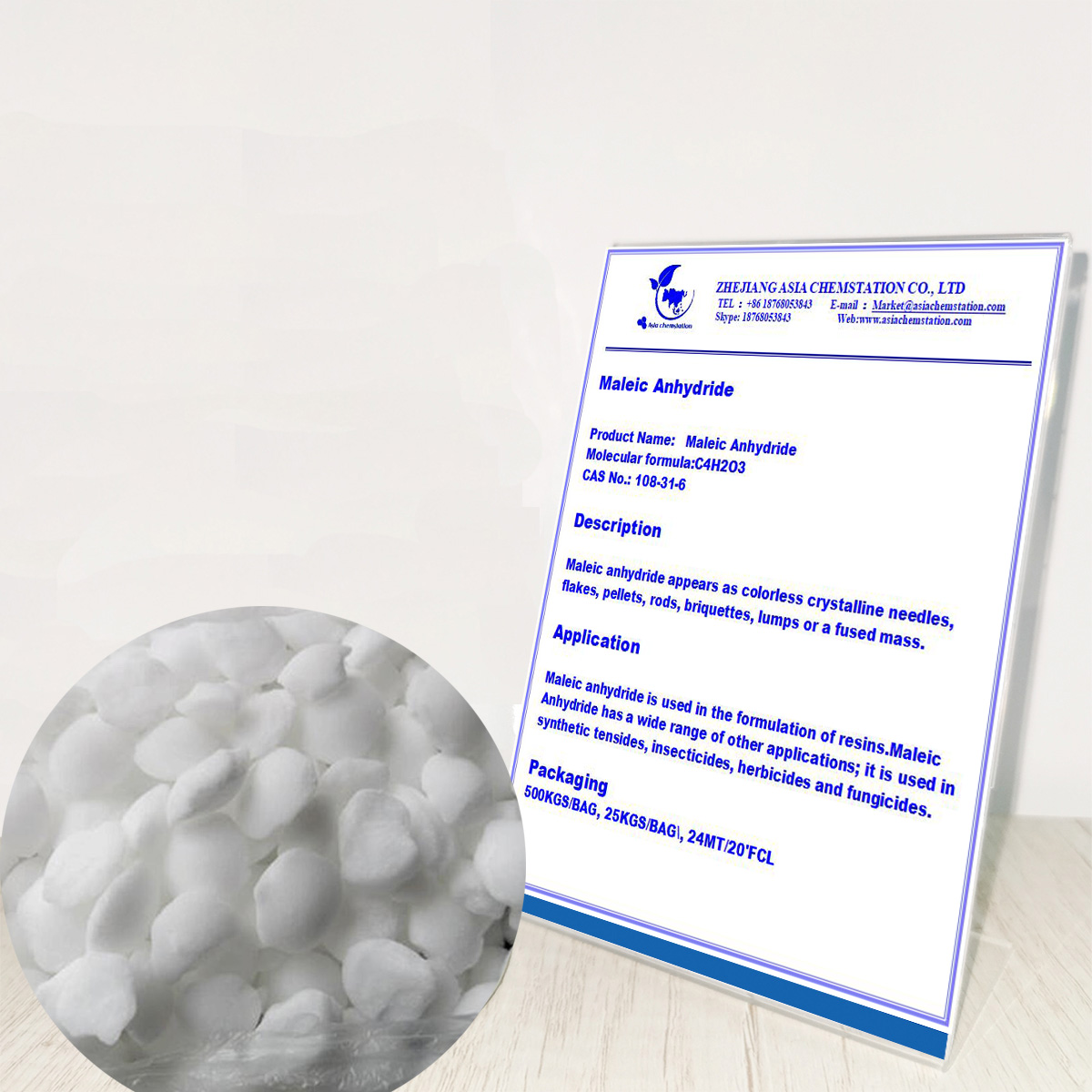
At ambient temperature, Maleic Anhydride presents as white to colorless needle‑shaped crystals or flakes, with a characteristic pungent odor and a notable sublimation tendency. Its conjugated cis‑acyl structure – featuring one vinyl group flanked by two carbonyl groups – endows the molecule with exceptional reactivity, enabling a broad spectrum of transformations including addition, polymerization, esterification, and amidation reactions.
| Parameter | Specification | Remarks |
|---|---|---|
| CAS No. | 108‑31‑6 | |
| Molecular Formula | C₄H₂O₃ | Molecular Weight: 98.06 |
| Melting Point | 52.8℃ | Critical solid‑liquid phase transition point |
| Boiling Point | 202℃ (at 1013 hPa) | |
| Density | 1.48 g/cm³ (at 20℃) | Solid‑phase density |
| Vapor Pressure | 0.02 hPa (at 20℃) | Low volatility; rises markedly upon heating |
| Flash Point | 102‑103℃ | Flammable liquid classification |
| Explosive Limits | 1.4% – 7.1% (v/v) | Dust/air or vapor/air mixture hazard |
| Auto‑ignition Temperature | Approx. 475℃ | |
| Solubility | Soluble in water (hydrolyzes to maleic acid); freely soluble in acetone, ethanol, benzene, ethyl acetate, and most organic solvents | Moisture‑sensitive |
Ⅱ. Production Technology – The Industry Benchmark
The current global standard is the n‑butane direct oxidation process, first commercialized by Monsanto (now Clariant) in 1974. This route has since become the primary driver of worldwide capacity expansion. Compared to the traditional benzene oxidation method, the n‑butane pathway offers decisive advantages in raw material cost competitiveness and environmental compliance. Domestic production capacity in China has increasingly shifted toward this technology, with industry leaders such as Sinopec Yizheng Chemical Fibre having successfully scaled up to 140,000 tons per annum in recent expansions.
Main Reaction Equation (n‑butane route):

Process Highlights: This is a strongly exothermic reaction. Modern industrial plants are typically equipped with high‑efficiency heat removal systems and tail‑gas recovery units, enabling co‑generation of high‑pressure steam to significantly enhance overall energy efficiency.
Ⅲ. Quality Specifications – Premium Grade Assurance
Our premium industrial‑grade product consistently delivers purity ≥ 99.5 wt%. Beyond purity, the solidification point (≥ 52.0℃) serves as the most reliable indicator of product integrity, directly reflecting trace impurity levels.
| Test Item | Premium Grade | Analytical Reagent (AR) Grade | Remarks |
|---|---|---|---|
| Purity (C₄H₂O₃) | ≥ 99.5% | ≥ 99.5% | Primary quality control metric |
| Solidification Point | ≥ 52.0℃ | 52.0 – 54.0℃ | Reflects purity and crystallization behavior |
| Color (Hazen/APHA) | ≤ 20 | —— | Critical for liquid‑phase appearance |
| Iron Content (Fe) | ≤ 0.0005% | —— | Affects downstream polymerization and product color |
| Residue on Ignition | ≤ 0.01% | ≤ 0.01% | Indicates total inorganic impurities |
| Water‑Insoluble Matter | —— | ≤ 0.005% |
Ⅳ. Key Applications & Downstream Value Chain
Maleic Anhydride stands as a cornerstone intermediate for polymer materials and specialty chemicals, with a consumption structure that continues to diversify:
1. Polymer Synthesis & Modification
Unsaturated Polyester Resins (UPR): The largest consumer segment globally and domestically, accounting for over 55% of total Chinese consumption. Used extensively in fiberglass‑reinforced plastics (FRP), marine vessels, automotive components, and corrosion‑resistant equipment.
Copolymerization & Graft Modification: As a polar monomer, MAH is widely employed in melt‑grafting processes to produce MAH‑grafted polypropylene/polyethylene, serving as high‑performance compatibilizers that enhance interfacial adhesion in composite materials. It is also a precursor for polymaleic anhydride (PMA) and butadiene copolymers.
2. C4 Fine Chemical Platform
Through catalytic hydrogenation and downstream processing, MAH serves as the gateway to high‑value derivatives including 1,4‑butanediol (BDO), γ‑butyrolactone (GBL), tetrahydrofuran (THF), and succinic anhydride. This route represents a key non‑acetylene pathway for BDO production, offering process economics and supply‑chain flexibility.
3. Functional Chemicals & Specialty Intermediates
Agrochemicals & Pharmaceuticals: Intermediate for organophosphorus insecticides such as malathion intermediates, pyridaphenthion, and captan.
Food Additives (Indirect): Raw material for producing fumaric acid, malic acid, and succinic acid – though not directly applicable as a food additive itself.
Specialty Additives: Used in lubricating oil additives, papermaking sizing agents, surfactants, PVC stabilizers, and printing ink auxiliaries.
Ⅴ. Packaging, Storage & Safe Handling
Given its moisture‑sensitivity, corrosivity, and flammability, all packaging and storage must strictly comply with hazardous chemical regulations.
Packaging Options:
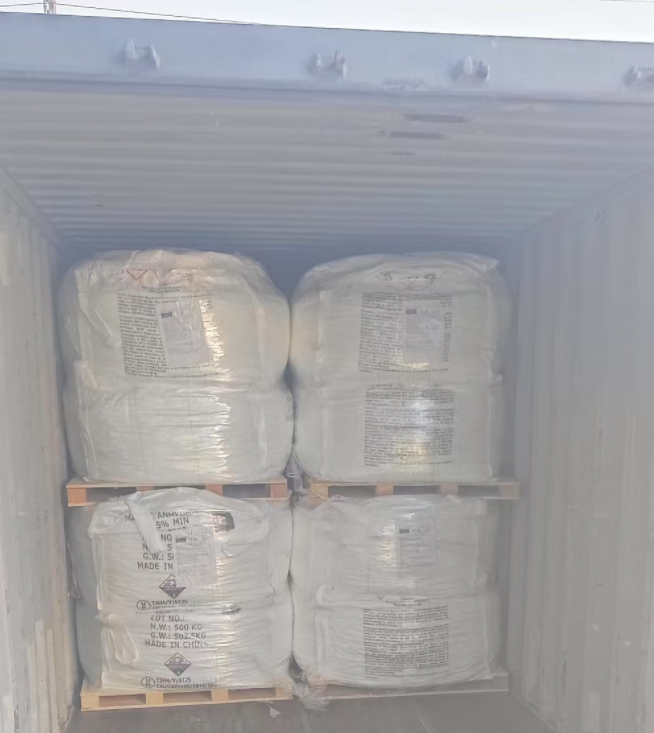
Solid Form: 25 kg paper‑plastic composite bags with inner PE moisture‑barrier film, or 25 kg woven bags.
Molten Form: Insulated tank trucks or ISO tanks (maintained above 50℃ to preserve fluidity).
Storage Conditions: Store in a cool, dry, and well‑ventilated warehouse, with temperature ideally controlled at ≤ 20℃. Keep segregated from oxidizers, reducing agents, acids, bases, and food‑grade substances. No mixed storage. Maintain containers tightly sealed due to sublimation and moisture sensitivity.
Hazard Classification: UN No. 2215, Class 8 Corrosive Substance. GHS hazards include: harmful if swallowed, causes severe skin burns and eye damage, may cause allergy or asthma symptoms if inhaled, and causes damage to organs through prolonged exposure.
Operational Precautions: Conduct operations in closed systems with local exhaust ventilation. Recommended PPE: self‑filtering dust masks, chemical safety goggles, acid‑resistant protective clothing, and neoprene gloves. Smoking and open flames strictly prohibited. Use explosion‑proof ventilation systems and prevent dust generation/release in the workplace.
Why Choose Our Maleic Anhydride?
Consistent quality meeting or exceeding international premium-grade standards
Vertically integrated supply chain ensuring reliable availability and competitive pricing
Technical support for downstream process optimization and application development
Flexible logistics offering both solid and molten forms to match your production requirements
For inquiries, specifications, or supply discussions, please contact our commercial team. We are committed to being your preferred partner in C4-based chemical solutions.